Categories
anxiety

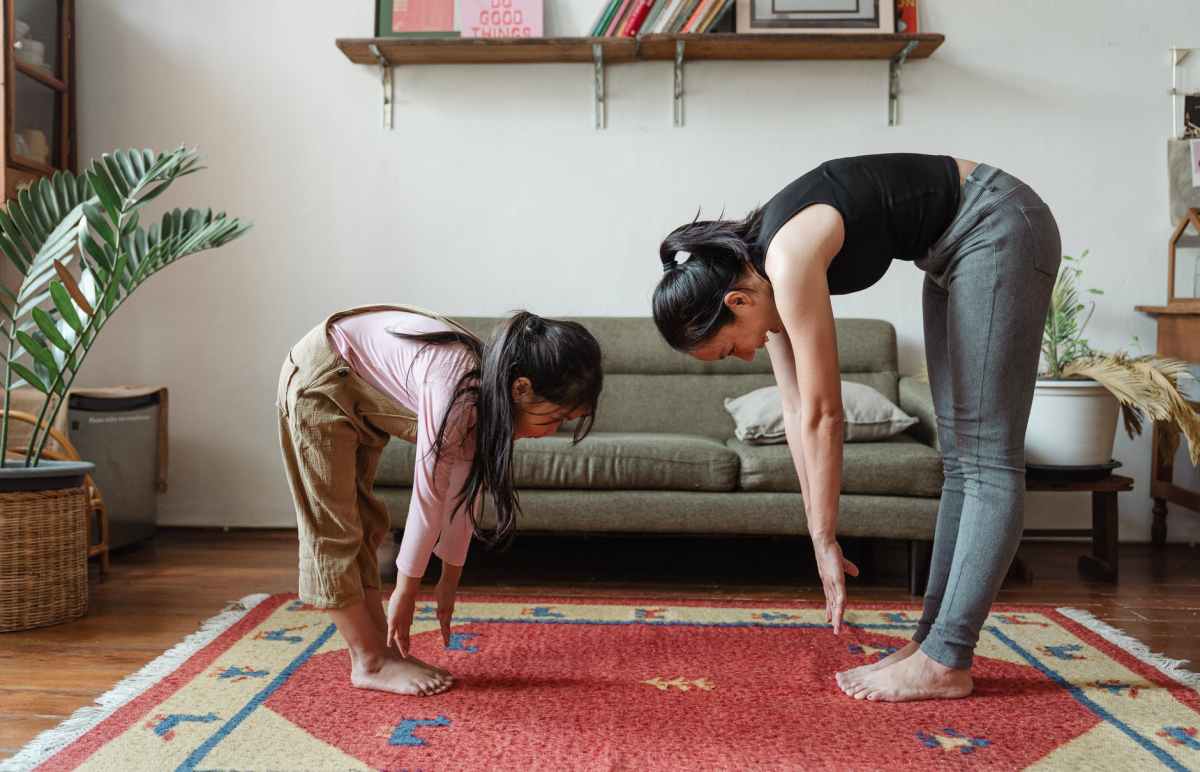
Free Yoga For Kids

Do you know a child who is feeling anxious at the moment? Are you wondering how we can support children’s wellbeing? If the answer is yes to either of these questions, here are some valuable resources for you.

This amazing Irish primary school teacher and yoga instructor (Instagram here) has combined his two roles to create engaging free well-being lessons that combine stories, yoga, meditative exercises and movement to support children’s mental health during these challenging times.

He has been kind enough to create two different versions of the same lesson: one is aimed for 5 – 9-year-olds while the other is aimed at the older classes. Both lessons range between 30 and 40 minutes and are a great resource in the current climate.

Video for the younger classes is here:

Video for the older classes is here:

If you find these remote yoga classes engaging and valuable, please share far and wide to help the widest audience possible. Make sure a click subscribe on David’s Youtube Channel to make sure that you get notified when Lesson Two comes online.

Make sure to follow @davidmooney_yoga on Instagram for updates and more lessons in the future!

Like what you read?

Every so often, I send short and free emails to 100s of subscribers with strategies for behaviour, inclusion and random thoughts, feel free to sign up here.

Processing…
Success! You're on the list.
Categories
Teacher Mindset

5 Quotes For Teachers & Free eBook

A teacher’s best asset is their mind. Stress, anxiety, negativity and all the other things that inhibit our happiness naturally inhibit the quality of our teaching also. I’ve written before about two ways I deal with stress. I think it’s important to talk about this subject as the statistics are so damning.

To maintain a tidy classroom, we develop daily, weekly and yearly habits. One-off fixes are insufficient. I have found maintaining a stress-free and resilient mind is much the same. I have had to develop daily, weekly and yearly habits that help me maintain equilibrium. This isn’t to say my mind is squeaky clean. Much like the classroom, every so often someone bursts open one of those yoghurt tubes (don’t get me started) and makes a huge mess. Thanks to productive habits, however, the mess doesn’t last forever.

Reading and listening to philosophy has been one of my cornerstones. It keeps the principles and practices I value at the forefront of my mind and consuming them prevents me from slipping into old habits. Reading is great but it is my holy grail. I love a podcast, audiobook and youtube clips too as I can listen as I carry out mundane tasks. 

A short book I loved recently and which gave me perspective was Seneca: On the Shortness of Life. It includes three letters: one to Paulinus, one to his mother and one to Serenus. The whole book is 100 short pages and I was the full cliché highlighting quote after quote. I’m going to let the quotes speak for themselves. If you like the book but you’re still not sure, I’m going to include a link to get the first letter for free below.  

My 5 Favourite Quotes that Teachers May Find Thought-Provoking

“You will find no one willing to share out his money; but to how many does each of us divide up his life! People are frugal in guarding their personal property; but as soon as it comes to squandering time they are most wasteful of the thing in which it is right to be stingy.”

“It is generally agreed that no activity can be successfully pursued by an individual who is preoccupied since the mind when distracted absorbs nothing deeply, but rejects everything which is, so to speak, crammed into it. Living is the least desirable activity of the preoccupied man.”

“One person who has achieved the badge of office they coveted longs to lay it aside, and keeps repeating ‘Will this year never end?’

“But nobody works out the value of time: people use it lavishly as if it cost nothing. But if death threatens these same people, you will see them praying to their doctors; if they are in fear of capital punishment, you will see them prepared to spend their all to stay alive. So inconsistent are they in their feelings. But if each of us could have the tally of their future years set before him, as we can of our past years, how alarmed would be those who saw only a few years ahead, and how carefully would they use them.”

“It is no use pouring any amount of liquid into a container without a bottom to catch and hold it, so it does not matter how much time we are given if there is nowhere for it to settle; it escapes through the cracks and holes of the mind.”

Reading books like this one remind me that the day-to-day things that are inclined to stress me are generally meaningless in the wider scheme of things. They help me discard the frivolous thinking and time-wasting I can fall into when I’m not exposing myself to these habitual reminders.

I’d recommend downloading his first letter for free below. You can view this file as a PDF or put it on your kindle to see if it’s for you. You can also take the plunge and buy the full book here. If you want to receive a weekly email from me every Monday that includes a strategy for behaviour and inclusion alongside a thought that links in with topics like stress and mental health, you can subscribe below.

Processing…
Success! You're on the list.
Categories
Teacher Mindset

2 Strategies For Stressed Teachers (And One to Avoid)

If you’re a teacher and you’re stressed, you’re in good company. One in four teachers rates their jobs as very or extremely stressful. It is estimated as high as 46% of teachers leave the profession in the first five years of their career. In Germany, only 26% of teachers make it to retirement age – compared to 54% of other public sector employees. Research shows that 52% of early retirements can be attributed to psychiatric or psychosomatic disorders. The statistics are damning. Despite what the general population might think and or joke, teachers need to be conscious of their stress levels for the good of their careers and health. 

Occupational stress is considered most prevalent in professions that involve human interaction. Teaching fits this category as the social nature, uncertainty, emotional intensity and high levels of attention to others contribute to the stresses that accumulate over hours, days, weeks, terms and years. How should we cope with this stress? How do we ensure the role we play is sustainable for over thirty to forty years?

My Experience and What Helped

A few years ago, I dealt with chronic stress. It ended up being a crash course in stress management. My personal life combined with my professional life to create one of those perfect storms that have the potential to bring destruction if you don’t catch it early and batten down the hatches. It’s important to acknowledge that stress is like a storm, completely unavoidable. It is how we prepare, perceive and manage it that determines how much damage it does before it passes. And it does pass.

While I was continuing to move forward through the year, I adopted a two-pronged approach that is research-based and proved a lifesaver: Direct-Action and Palliative techniques.

Direct-Action is self-explanatory. It involves identifying the source of the stress, determining the reason it is stressing you and then deciding how to resolve it. Then, you activate the plan and execute. Stress is said to be the result of an imbalance between the demands you are facing and the resources you have to meet those demands. If you have lots to do, you may become stressed if you don’t have the time. If you are faced with a child who you find particularly challenging, you may become stressed if you feel you don’t have the expertise to deal with it. If you have an inspection coming up, you may become stressed if you feel unprepared. Taking a direct-action approach to these examples, you will seek to manage your time, develop your knowledge and complete the necessary work respectively. You are working towards reducing and eliminating the source of the stress.

Palliative techniques aim to reduce stress without dealing with the source. This can mean different things for different people. Personally, I began to journal (link here), I took up yoga, I played a team sport, I went away on trips with friends for the odd weekend and got out in nature as much as I could. For others, this could entail socialising, additional sleep or anything you deem to be a stress reliever. You’re switching off. You’re in a different mode and you’re fully immersed in whatever activity that you love and enjoy.

The five most common stressors for teachers are school environment, student misbehaviour, relationships with parents, time demands and inadequate training: all stressors which can be dealt with through a combination of direct action and palliative techniques. You have to find the right balance for you between trying to put out the fire and stepping away from it every once in a while.

The space to avoid, for me, was that space in between. Where you take one step away from the fire so you’re not putting it out but not too far away that you’re safe from getting burnt. The equivalent of this, for me, was sitting around complaining about my stress without taking action or lying around the house thinking about my worries when I could have been off enjoying myself. My stress was at its highest when I was in this space, neither working to eliminate the stress or taking my mind off it and enjoying life. When I fully invested in either the direct action and palliative approach, which I managed for sustained periods with the occasional lapse to despair, I managed to contain my stress and gradually work my way through it. I also managed to make some great memories when I was fully switched off and tuned into things that I loved. Take my advice and either take direct action or switch off with some palliative activity and whatever you do, avoid the middle where you’re doing neither.

Like what you read?

Every Monday I send a short and free email with one strategy for behaviour, one for inclusion and one small thought, feel free to sign up here.

Processing…
Success! You're on the list.
Categories
anxiety Behaviour Management Inclusion parenting

The Difference Between Constructive and Destructive Anxiety Management

I came across some quality content from Dr. Tony Attwood on anxiety management related to children with autism. I love any information that is easy to understand and relay to people and has the potential to make a difference. This content fits the criteria.

Dr. Attwood discusses the two types of anxiety management. Constructive habits succeed in mitigating the potential impact of anxiety whilst destructive habits also does this but to the detriment of relationships with others. Dr. Attwood details three destructive strategies to avoid and promotes six constructive alternatives. If constructive strategies are not being used, a child may naturally fall into using destructive ones.

Three Destructive Anxiety Management Strategies

  1. Excessive Control: When children are feeling anxious, they may seek to exert control through defiance or threats to property, self or people. The impact this has on relationships is clear. Excessive control to manage anxiety may result in a diagnosis of Oppositional Defiant Disorder (ODD). Is this a reason to move away from labels? (Full article here)
  2. Rituals: An anxious child may insist on sameness and become intolerant and inflexible to any change. They can become over-reliant on rituals and routines when they are too prolonged detracting from their ability to engage in other tasks.
  3. Emotional Explosions: When fight-or-flight reaches a certain point, a child rife with anxiety may release the emotional energy pent up through an outburst which hurts others and damages friendships and relationships. This also takes an emotional toll on themselves in the aftermath.

Six Constructive Anxiety Management Strategies

These six strategies are necessities for anxious children. They are not rewards. The child requires them to engage with day-to-day life successfully. Analyse each one and consider if you are making the best use of each strategy.

  1. Physical Activity: Often underestimated, being physically active has a significant impact on anxiety. This can be through team sports, individual sports, movement breaks or walks. The options are endless and finding the medium that the child enjoys exercising through will aid them in coping with their anxiety.
  2. Relaxation: An anxious child has never relaxed just because they were told to. They have to be taught how to relax. This could be through a meditation app like Mindful Gnats (Android link here and Apple here), teaching the art of journaling, yoga or engaging in a range of activities depending on the child’s personality (Article: 6 strategies to help an anxious child here). A highly anxious child might never have learned to relax so it must be a priority to teach them.
  3. Special Interests: Allowing a stressed or anxious child to engage with their special interest is a powerful tool to relieve building anxiety. Depending on the interest, this can be easily implemented into day-to-day life. Allowing an anxious child with autism to engage with their special interest is not time wasted. It is time-efficient as they will be able to re-engage with activity after a short break.
  4. Favourite Person: An anxious child can experience relief when they are afforded some quality time with their favourite person. If the person is an SNA, teacher or child, this strategy can be utilised without extensive planning. If the person cannot be present, we can use audio messages, phone calls and emails. The child’s favourite person can be a great sense of comfort and relief.
  5. Diet: The benefits of a good diet go beyond the scope of this article. Needless to say that a balanced diet will have a positive impact on a child’s anxiety compared to a diet of junk food, sugar and refined carbohydrates.
  6. Sleep: Much like a healthy diet, we all can appreciate the positive effect of eight to ten hours of sleep on an anxious child. Weighted blankets, avoiding screen time before bed and a consistent nighttime routine can contribute to good sleep hygiene.

When you consider the child, ask yourself which type of strategies are being used to manage their anxiety. Are they destructive or constructive? Can we improve on how we use constructive habits? Which constructive habits can I control if I am a teacher or a parent? Focus on these and lean away from destructive behaviour.

Like what you read?

Every so often, I send short and free emails to 100s of subscribers with strategies for behaviour, inclusion and random thoughts, feel free to sign up here.

Processing…
Success! You're on the list.