Categories
Behaviour Management Inclusion Special Education Teacher Mindset

The Wisdom Of The Crowd

If you take five runners who have raced 10km and add their race times together and divide the answer by five to calculate the average race time, that time will be lower than the fastest runner.

The Wisdom of the Crowd Theory works differently to this logic when applied to decision-making. It believes that the collective opinion or decision will be superior to any individual expert or specialist who works alone.

If you apply this theory and take five adults dealing with a complex issue, it suggests the quality of their solution and plan will be HIGHER than what any individual would decide alone.

Matt Syed’s book “Rebel Ideas” explains the diversity of cultural backgrounds and perspectives help people to view complex problems from a more holistic point of view. Together, a group can see an issue from many angles previously unseen. 

Like the picture above, if you have only one person contributing their opinion to what they are touching, they will most definitely be wrong. However, if you get the six of them to discuss their points of view together, there is a much stronger chance of a more successful outcome.

When teaching children with social, emotional or mental health needs, adopting this theory is wise: no matter how experienced you may be. Listening to, considering, accepting and offering different points of view will lead to better decisions and outcomes for the child.

As the famous quote goes:

“If you want to go fast, go alone. If you want to go far, go together.”

Like what you read?

Every so often, I send short and free emails to 100s of subscribers with strategies for behaviour, inclusion and random thoughts, feel free to sign up here.
Processing…
Success! You're on the list.
Categories
anxiety

Free Yoga For Kids

Do you know a child who is feeling anxious at the moment? Are you wondering how we can support children’s wellbeing? If the answer is yes to either of these questions, here are some valuable resources for you.

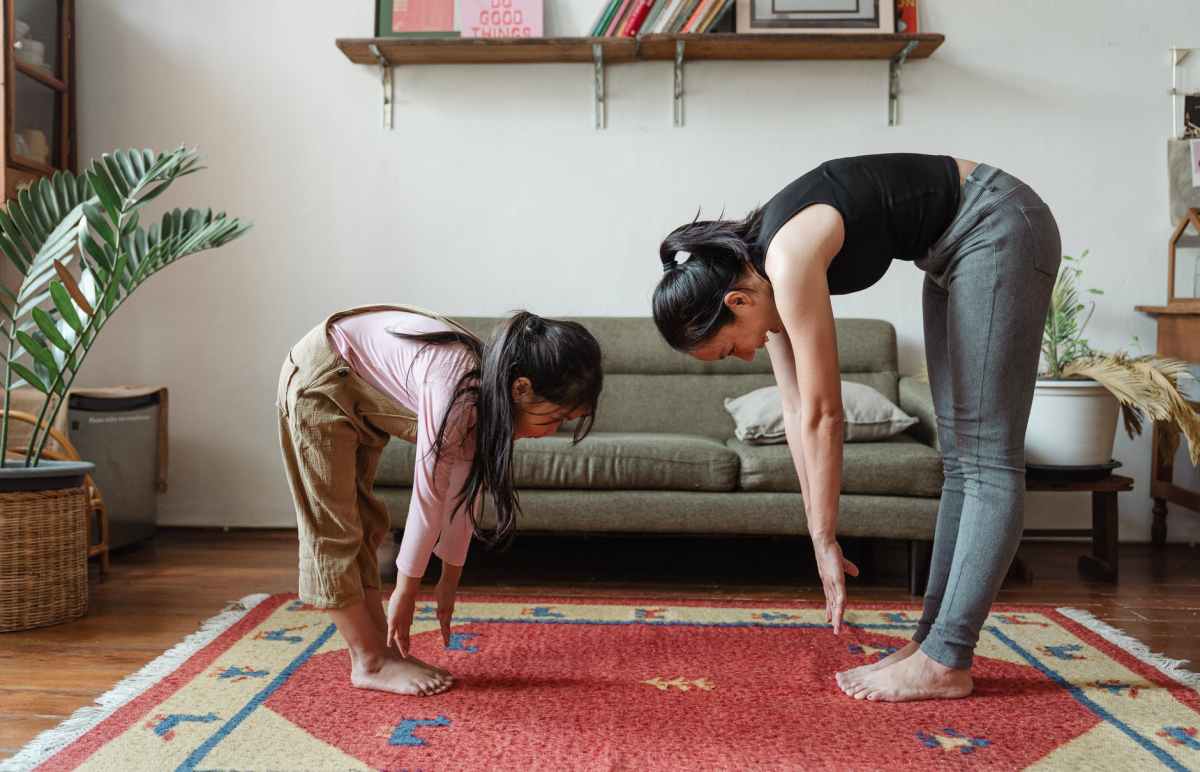
This amazing Irish primary school teacher and yoga instructor (Instagram here) has combined his two roles to create engaging free well-being lessons that combine stories, yoga, meditative exercises and movement to support children’s mental health during these challenging times.

He has been kind enough to create two different versions of the same lesson: one is aimed for 5 – 9-year-olds while the other is aimed at the older classes. Both lessons range between 30 and 40 minutes and are a great resource in the current climate.

Video for the younger classes is here:

Video for the older classes is here:

If you find these remote yoga classes engaging and valuable, please share far and wide to help the widest audience possible. Make sure a click subscribe on David’s Youtube Channel to make sure that you get notified when Lesson Two comes online.

Make sure to follow @davidmooney_yoga on Instagram for updates and more lessons in the future!

Like what you read?

Every so often, I send short and free emails to 100s of subscribers with strategies for behaviour, inclusion and random thoughts, feel free to sign up here.

Processing…
Success! You're on the list.
Categories
anxiety Behaviour Management Homeschool parenting

Homeschool and the 80/20 Rule

Teachers, parents and children have been thrust into remote teaching, homeschooling and remote learning in most countries around the world right now and we rush to make sense of it all. How can we teach, facilitate learning and learn in our roles while also navigating the unavoidable stress of a global pandemic?

The first thing all three groups have to do is ensure that the keystones of self-care are in place. This can be done by making self-care a priority. Nothing will be achieved if you burn yourself out with anxiety and stress and I suggest six ways to do this here. Journalling is a personal favourite. Exercise is also paramount for me. I like one strategy for the mind and one for the body to keep a balance.

Once self-care is being looked after, we have to look at educating and being educated. Thankfully, lots of teacher, parents and students are full of enthusiasm, creativity and drive to make sure that we make the most of what we can with the internet providing a wealth of support and advice.

Filter it.

Being wary of taking on too much whether, in the role of teaching, parenting or learning is something that needs to be considered. All the best practice being championed online is fantastic: as long as we don’t try to do it all. As Greg McKeown wrote in Essentialism, “you can do anything but not everything”. We must have a filter where we can adopt the most effective ideas and draw a line where we are satisfied that what we are doing is efficient and sustainable.

Pareto’s Principle.

This is where Pareto’s Principle can come into play. Vilfredo Federico Damaso Pareto was a distinguished philosopher and economist who can help us ensure that we are prepared for a marathon and not a sprint.

Pareto’s principle is that 80% of results will come from 20% of actions.

This is relevant to teachers, parents and students therefore as the opposite of this statistic could be true. 80% of actions are only getting 20% of our results. So as we try to juggle managing our self-care, home life, professional life, relationships and children, we should question every initiative we are using or considering and pose the question:

“Is this a lot more work for very little benefit?”

It is easy to fall into the trap of being busy but not productive and Pareto’s principle and the question it poses to every action we take right now can help us maintain our equilibrium and the equilibrium of our loved ones over the long-term. Absorb what is necessary and discard what is not.

Like what you read?

Every Monday I send a Newsletter with one tip for behaviour management, one for inclusion and one concept to get you thinking, feel free to sign up here.

Processing…
Success! You're on the list.